
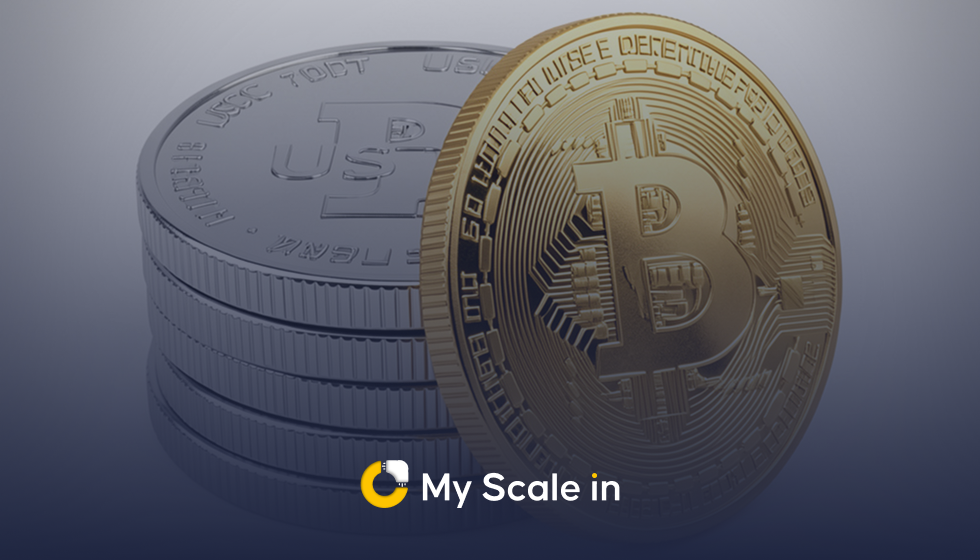
Stablecoins are the backbone of modern crypto trading, offering price stability in an otherwise volatile market. Among them, USDC and USDT stand out as the most widely used dollar-pegged options. While both aim to maintain a 1:1 value with the US dollar, they differ significantly in transparency, regulation, and use cases.
Understanding these differences is crucial for traders, investors, and businesses looking to manage risk, move funds efficiently, and make smarter crypto decisions.If you’re using My Scale in to guide your crypto investment decisions, understanding the difference between USDC and USDT isn’t optional—it’s essential.
About Stablecoins in the Crypto Ecosystem
Stablecoins are like the calm eye of the storm in the wild world of cryptocurrency. While Bitcoin and Ethereum swing up and down like a roller coaster, stablecoins aim to stay steady, usually pegged to the US dollar. That stability is exactly why traders, investors, and businesses rely on them daily. Whether you’re parking funds during market volatility or moving money quickly across borders, stablecoins play a critical role.
Among all stablecoins, two names dominate the conversation: USDT (Tether) and USDC (USD Coin). They both promise one simple thing—1 token equals 1 US dollar. But behind that simple promise lies very different approaches to transparency, regulation, and trust.
Understanding USDT (Tether)
USDT, commonly known as Tether, is the oldest and most widely used stablecoin in the crypto market. Launched in 2014, it was designed to bridge the gap between traditional finance and digital assets. Over the years, USDT has become the backbone of crypto trading, especially on centralized exchanges. If crypto markets were highways, USDT would be the main road everyone uses.
Tether maintains its dollar peg by claiming that each USDT is backed by reserves, which include cash, cash equivalents, and other assets. Its massive liquidity makes it incredibly useful for high-frequency trading, arbitrage, and quick entry or exit from volatile positions. However, USDT has faced criticism over transparency and reserve disclosures. While it has improved reporting over time, questions still linger for cautious investors.
Key highlights of USDT:
- Highest market capitalization among stablecoins
- Extremely high liquidity
- Widely accepted across exchanges
- Faster access in emerging markets
Understanding USDC (USD Coin)
USDC is often described as the “clean and compliant” stablecoin. Launched in 2018 by Circle in partnership with Coinbase, USDC was built with regulation and transparency at its core. From day one, the goal was simple: create a stablecoin that institutions and regulators could trust without hesitation.
Each USDC token is backed 1:1 by cash and short-term US Treasury bonds, with regular third-party audits published publicly. This level of transparency has made USDC especially popular among institutions, long-term investors, and DeFi platforms. While its market cap is smaller than USDT, its reputation for reliability continues to grow.
Key highlights of USDC:
- Strong regulatory alignment
- Monthly audited reserves
- Preferred by institutions
- High trust factor
USDC vs. USDT: Key Differences at a Glance
At a surface level, USDC and USDT look identical—both are dollar-pegged stablecoins used for trading and transfers. But dig a little deeper, and the differences become clear. Think of USDT as a fast, widely accepted cash alternative, while USDC behaves more like a regulated digital dollar.
Core differences include:
- Issuer: USDT is issued by Tether; USDC by Circle
- Transparency: USDC publishes regular audits; USDT offers attestations
- Regulation: USDC is more compliant with US regulations
- Liquidity: USDT dominates trading volume
Choosing between them depends less on price stability and more on your priorities—speed and liquidity versus trust and compliance.
Read our Post to know More: What Is the Difference Between Stablecoins and Bitcoin?A Complete Beginner’s Guide
Transparency and Trust Comparison
Transparency is where the USDC vs. USDT debate gets serious. USDC sets the gold standard by publishing monthly, third-party audited reserve reports. Investors know exactly what backs each token, which builds confidence, especially during market stress.
USDT, on the other hand, has historically been less transparent. While it now provides reserve breakdowns, critics argue that the disclosures lack the depth and frequency of USDC audits. That doesn’t mean USDT is unsafe, but it does mean users must be comfortable with a higher level of trust in the issuer.
Transparency comparison:
- USDC: Full audits, public reports
- USDT: Reserve attestations, less detail
- Trust level: Higher for USDC among institutions
Market Adoption and Liquidity
If liquidity were oxygen, USDT would be the air crypto markets breathe. It dominates trading pairs across major exchanges and often accounts for the majority of daily trading volume. This makes USDT ideal for active traders who need instant execution with minimal slippage.
USDC, while slightly behind in volume, is rapidly expanding. It’s widely supported on regulated exchanges and increasingly used in DeFi protocols. For everyday users, both are easy to access, but USDT still wins in raw market penetration.
Regulatory Compliance and Risk
Regulation can feel boring—until it matters. USDC’s compliance-first approach makes it less likely to face sudden regulatory shocks. That’s why many institutions and fintech companies prefer it.
USDT operates more globally, which helps adoption but also exposes it to regulatory scrutiny. If you’re risk-averse, USDC may feel like the safer harbor. If flexibility matters more, USDT offers broader reach.
Impact of MiCA Regulation on USDC vs. USDT
The Markets in Crypto-Assets Regulation (MiCA) is a game-changer for stablecoins operating in the European Union. Introduced by the EU, MiCA creates a unified legal framework that governs how crypto assets—especially stablecoins—are issued, backed, and supervised. Under MiCA, stablecoins are categorized mainly as E-Money Tokens (EMTs) or Asset-Referenced Tokens (ARTs), and issuers must meet strict requirements related to reserve backing, transparency, licensing, and consumer protection.
This is where the difference between USDC and USDT becomes very clear. USDC, issued by Circle, has proactively aligned itself with MiCA rules by pursuing European licenses and maintaining full, regularly audited reserves. This makes USDC more future-proof within the EU market and more attractive to regulated institutions and compliance-focused users.
On the other hand, USDT has faced challenges meeting MiCA’s standards, particularly around disclosure and regulatory structure. As a result, some European exchanges have limited or reconsidered USDT support. For users in or connected to the EU, MiCA tilts the balance strongly in favor of USDC when long-term regulatory stability matters.
Blockchain Support and Network Availability
Both stablecoins are available across multiple blockchains, including Ethereum, Tron, Solana, and others. USDT has broader support on low-fee networks like Tron, making it cheaper for frequent transfers. USDC is catching up fast, especially in DeFi-friendly ecosystems.
When Should You Use USDT?
USDT shines in fast-paced environments. It’s perfect if you:
- Trade frequently
- Need deep liquidity
- Operate in global or emerging markets
When Should You Use USDC?
USDC is ideal if you:
- Value transparency
- Hold stablecoins long-term
- Use DeFi or institutional platforms
Conclusion: Which Stablecoin Is Better?
There’s no universal winner in the USDC vs. USDT debate. USDT dominates in liquidity and global usage, while USDC leads in transparency and regulatory trust. On My Scale In, the smarter approach isn’t choosing one forever—it’s knowing when to use each. Use USDT for speed and volume. Use USDC for security and peace of mind. In crypto, flexibility is power.
FAQs
1. Is USDC safer than USDT?
USDC is generally considered safer due to regular audits and regulatory compliance.
2. Why do traders prefer USDT?
Because of higher liquidity and wider exchange support.
3. Can USDC or USDT lose their peg?
Both aim to maintain a 1:1 peg, but market stress can cause short-term deviations.
4. Which is better for beginners?
USDC is often better for beginners due to transparency and simplicity.
5. Should I hold both USDC and USDT?
Yes, holding both provides flexibility across platforms and use cases.