
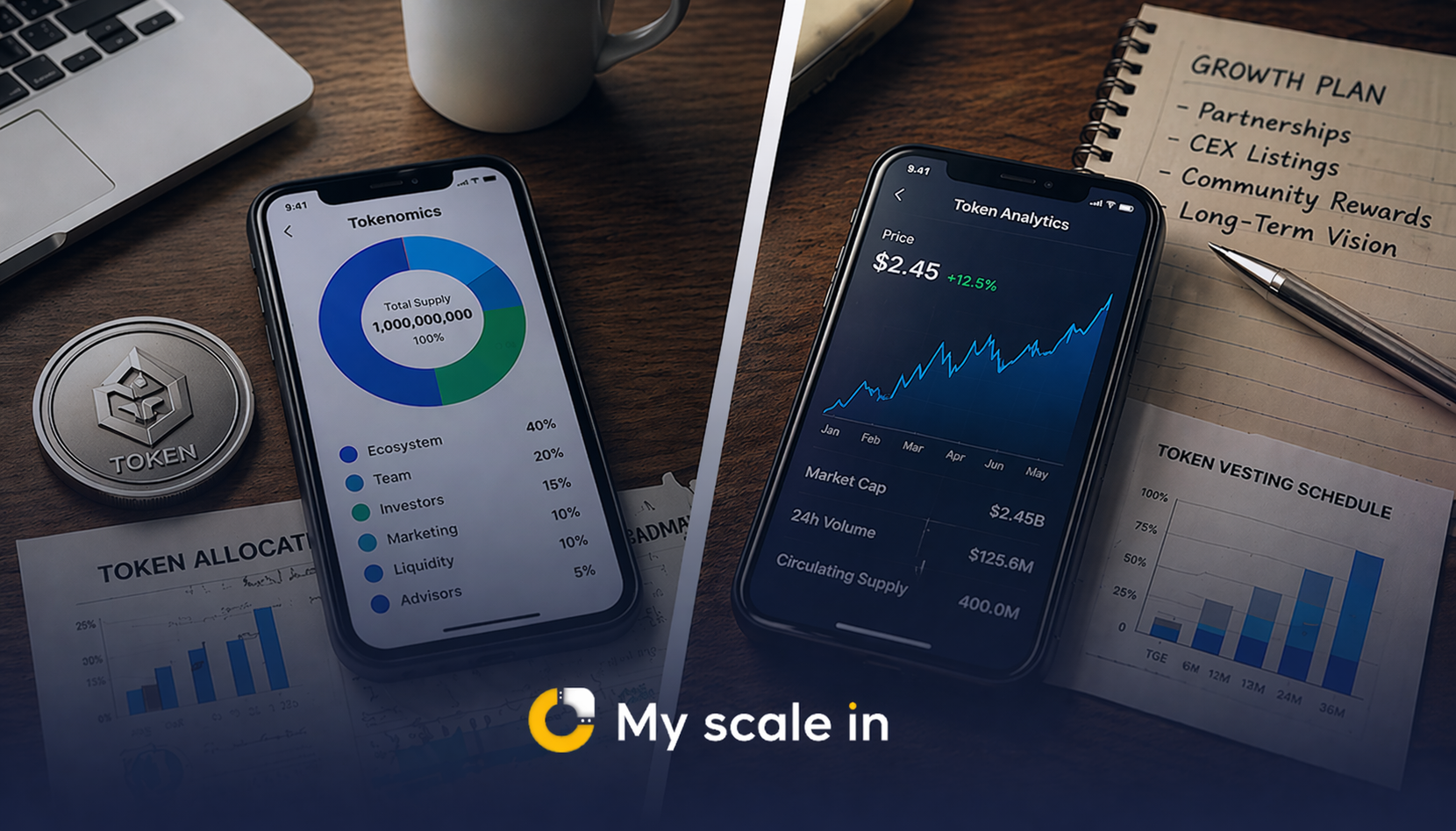
In the rapidly evolving world of cryptocurrency, understanding tokenomics is essential before investing in any digital asset. Tokenomics—short for token economics—determines how a crypto token functions, its value potential, and long-term sustainability.
Whether you’re a beginner or an experienced investor, evaluating tokenomics properly can help you avoid risky projects and identify promising opportunities. In this guide, we’ll break down everything you need to know to analyze a crypto token effectively.
What Is Tokenomics?
Tokenomics refers to the economic structure behind a cryptocurrency. It includes factors such as:
- Token supply
- Distribution
- Utility
- Incentives
- Governance
These elements collectively influence how a token behaves in the market and whether it can maintain or grow its value over time.
Strong tokenomics often indicates a well-designed project, while weak tokenomics can lead to inflation, low demand, or even project failure.
Why Tokenomics Matters in Crypto Investing?
Tokenomics plays a crucial role in determining a token’s success. Even if a project has great technology, poor economic design can limit its growth.
Here’s why tokenomics is important:
- Controls supply and demand
- Impacts price stability
- Encourages user participation
- Ensures long-term sustainability
Investors who understand tokenomics can make more informed decisions and reduce the risk of losses.
Key Factors to Evaluate in Tokenomics
1. Total Supply and Circulating Supply
One of the first things to check is the token supply.
- Total Supply: Maximum number of tokens that will ever exist
- Circulating Supply: Tokens currently available in the market
A lower supply can create scarcity, which may increase value—but only if demand exists.
Red flag: Extremely high supply with no clear demand strategy.
2. Token Distribution
Token distribution shows how tokens are allocated among:
- Founders and team
- Investors
- Community
- Treasury
A fair distribution ensures decentralization and trust.
Red flag: Large percentage held by insiders (risk of price manipulation).
3. Utility of the Token
A strong token must have real use cases.
Common utilities include:
- Payment within a platform
- Governance voting
- Access to services
- Staking rewards
The more useful a token is, the higher its demand potential.
Ask yourself: Why would people buy and hold this token?
4. Inflation and Deflation Mechanisms
Tokenomics often includes mechanisms to control supply:
- Inflationary: New tokens are created over time
- Deflationary: Tokens are burned or reduced
Balanced systems help maintain price stability.
Red flag: Unlimited inflation without demand growth.
5. Vesting and Lock-up Periods
Vesting schedules control when tokens are released.
- Prevents early investors from dumping tokens
- Encourages long-term commitment
Red flag: No lock-up period for team or investors.
6. Incentive Structure
Good tokenomics aligns incentives for all participants:
- Users earn rewards for activity
- Validators secure the network
- Developers are funded for growth
A healthy ecosystem motivates continuous engagement.
7. Governance Model
Some tokens allow holders to vote on decisions.
This includes:
- Protocol upgrades
- Fee structures
- Treasury allocation
Red Flag: Decentralized governance increases transparency and trust.
Common Tokenomics Red Flags
When evaluating a crypto token, watch out for these warning signs:
- No clear use case
- Overly complex token structure
- High insider ownership
- Unsustainable rewards (too good to be true)
- Lack of transparency
Avoiding these pitfalls can save you from poor investments.
How MyScale Helps You Analyze Token Data
Platforms like MyScale in provide powerful tools to analyze crypto data efficiently. With advanced data indexing and real-time analytics, you can:
- Track token metrics
- Analyze on-chain data
- Compare multiple tokens
- Identify trends quickly
Using data-driven insights, investors can make smarter and more confident decisions.
Practical Steps to Evaluate a Crypto Token
Follow this step-by-step approach:
- Read the whitepaper
- Check token supply and distribution
- Understand the utility
- Analyze market demand
- Review team and roadmap
- Use analytics tools like MyScale
Consistency in evaluation will improve your investment strategy over time.
FAQ Section
1. What is tokenomics in simple terms?
Tokenomics is the economic system behind a cryptocurrency that defines how it works, gains value, and sustains itself.
2. Why is token supply important?
Token supply affects scarcity and price. Limited supply with high demand can increase value, while excessive supply may reduce it.
3. How do I know if a token has good utility?
Check if the token is actively used within its ecosystem—for payments, governance, or services. Real use cases indicate strong utility.
4. What is a token burn?
A token burn permanently removes tokens from circulation, reducing supply and potentially increasing value.
5. Can tokenomics predict price?
Tokenomics doesn’t guarantee price movement but provides strong indicators of long-term potential and sustainability.
6. Is high APY always good in crypto?
Not always. Extremely high rewards may be unsustainable and could lead to inflation or token price collapse.
Conclusion
Understanding tokenomics is a critical skill for anyone involved in cryptocurrency investing. By evaluating factors like supply, utility, distribution, and incentives, you can identify strong projects and avoid risky ones.
With tools like MyScale, analyzing token data becomes easier and more accurate, giving you a competitive edge in the crypto market.
Always remember: good tokenomics builds long-term value, while poor tokenomics leads to failure.